
Grocery shopping and delivery Design concept
Qatfa
An Arabic grocery store connecting product photographs and pack sizes to baskets, delivery windows and mobile preparation tracking.
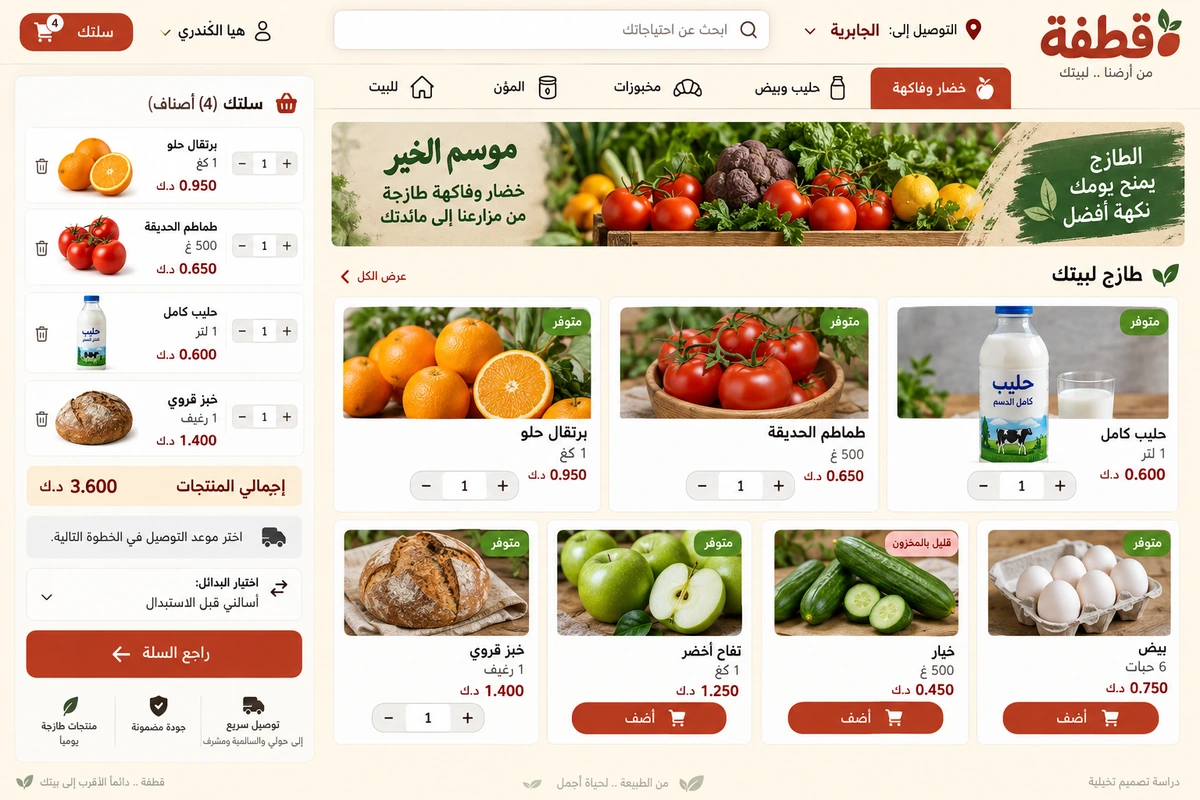
We designed Qatfa as a fictional Jabriya grocery client serving weekly orders in Hawally, Salmiya and Mishref. The purchase decision needed answers rather than a large advertisement: pack size, availability and delivery timing. A photographed catalogue, basket and time-window selector lead to a mobile tracking screen carrying the same order during preparation.
Client in the design study
Qatfa Daily Groceries
Jabriya, Kuwait
Project brief
A fictional Arabic grocery client with clear baskets, customer-approved substitutions and mobile tracking.
Design scope
- Arabic identity and photographed product catalogue
- Basket and delivery-window selection
- Mobile preparation-tracking screen
01 / The project challenge
The project challenge
Generic produce photographs do not explain the exact product arriving at a home. Per-kilogram and per-pack prices differ, substitutions require consent, and a product subtotal can be mistaken for the final delivery-inclusive amount. We kept sale units, product images and availability near prices, separated products from delivery charges, and connected tracking to a time window the customer actually selected.
02 / The solution we designed
The solution we designed
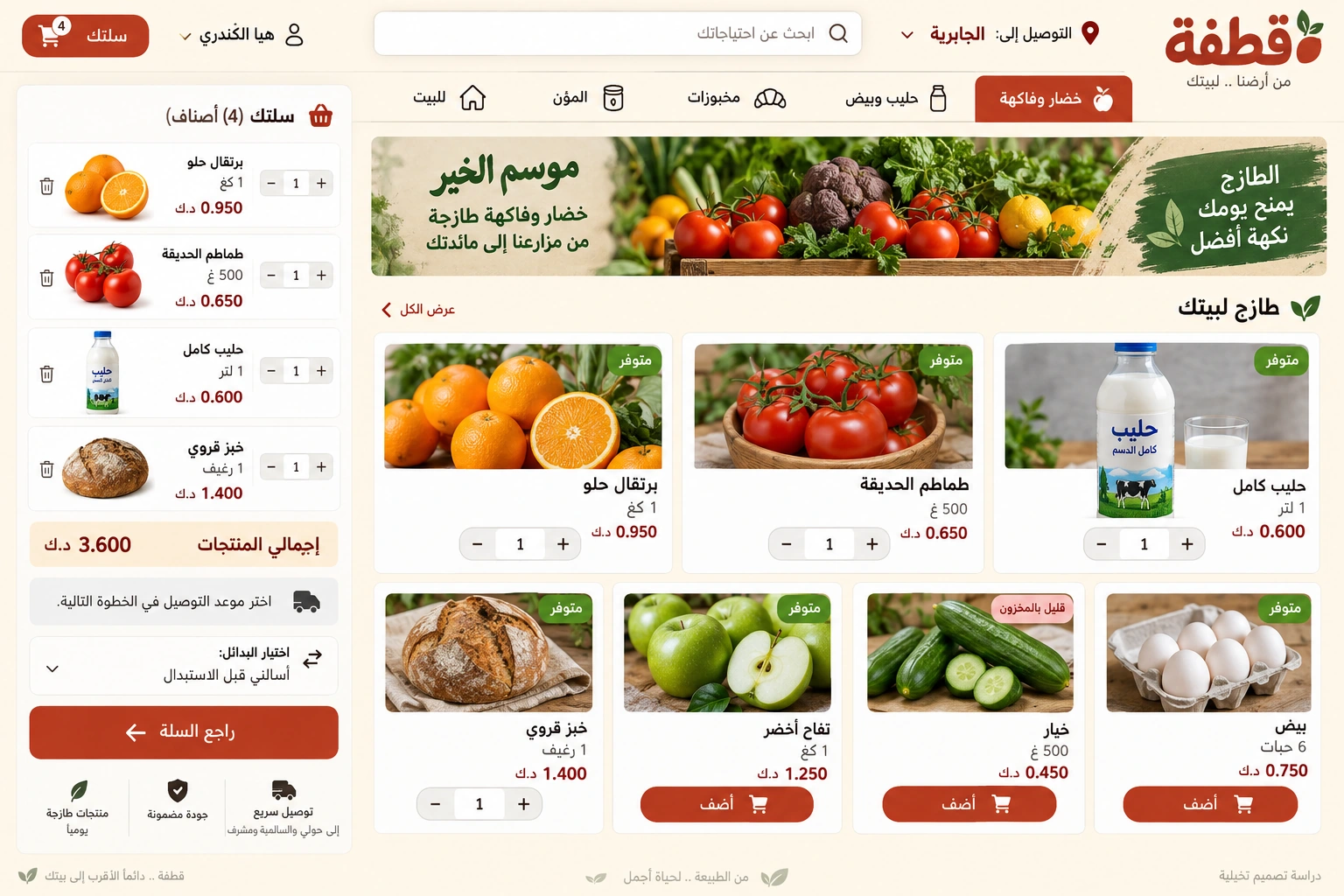
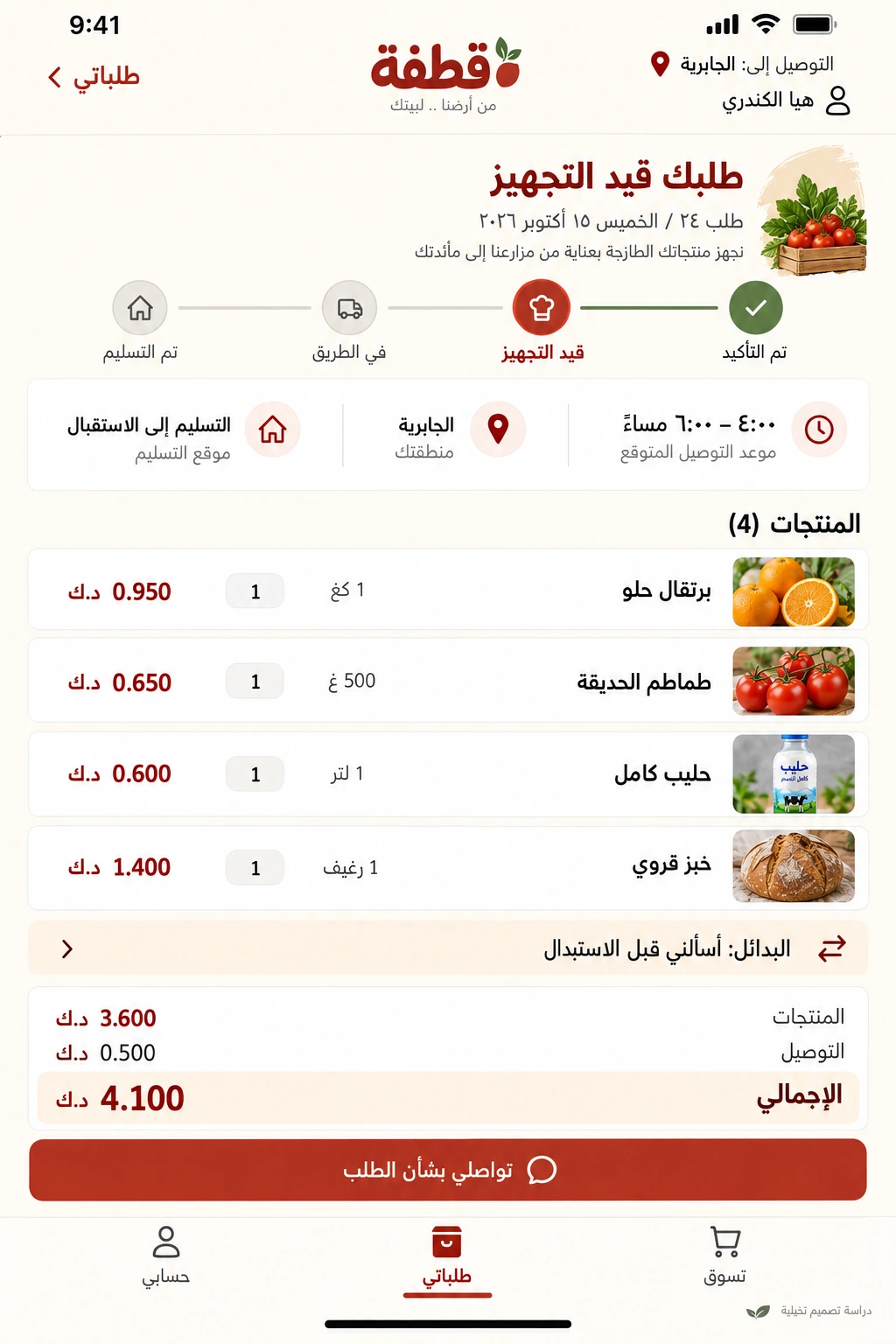
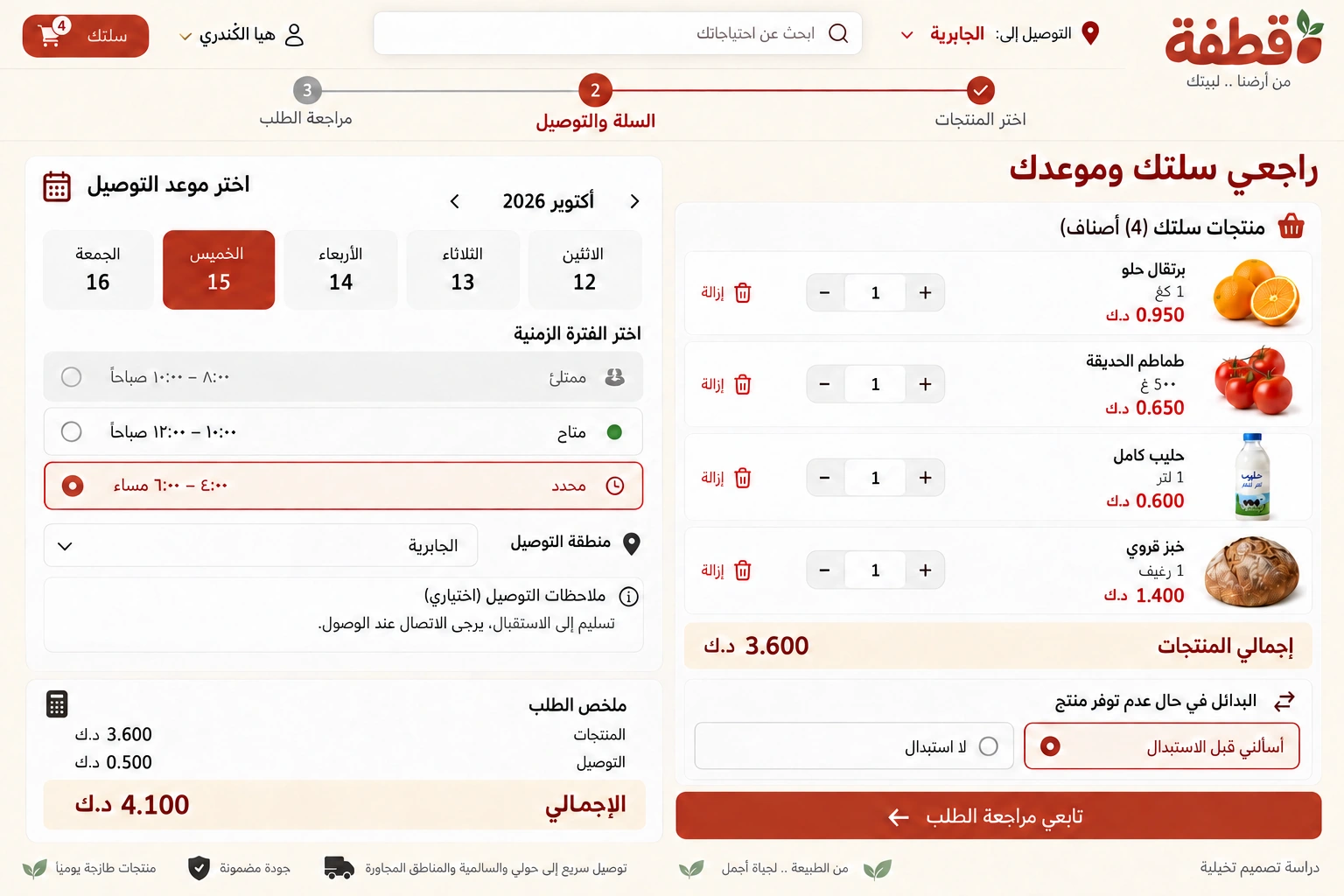
The store uses a photographed product grid instead of three text cards below one hero. Each item shows name, unit, amount, availability and an add action. Basket review includes quantities and substitution preference. Delivery windows have written full, available and selected states. The mobile screen retains the order number, window, shortened address and preparation stages, with a direct contact route for substitutions.
03 / The experience
The experience
Haya Al Kandari builds a Jabriya basket: one kilogram of oranges at 0.950 KD, half a kilogram of tomatoes at 0.650, a liter of milk at 0.600 and a loaf at 1.400. Products total 3.600 KD; a 0.500 delivery charge makes 4.100. Haya selects Thursday 15 October, four to six in the evening, and asks to be consulted before substitution. Mobile order 24 shows preparing with the same amount and window.
04 / What it could do
What it could do
Clear product packs
Photographs, sale units, amounts and availability describe the actual item rather than generic produce.
Transparent totals
Products and delivery are separated and calculated from the same quantities before confirmation.
Consented substitutes
A written preference stays visible during preparation and tracking.
Retained windows
The selected time appears in checkout and mobile alongside the same order and state.
05 / A typical journey
A typical journey
Select products
Read pack size and availability before adding the desired quantity.
Review the basket
Change quantities, check the product total and choose a substitution preference.
Choose delivery
Select an available window and review delivery, total and access instructions.
Follow preparation
Open the same order on mobile to see its state or discuss a substitute.
06 / Inside the interface
Inside the interface
Explore the Arabic web interfaces and companion app. The screens share a consistent identity and Kuwaiti sample workflows.
Explore the screens.
Open any screen to explore the complete project gallery.
07 / Design direction
Design direction
Tomato red, cream paper, natural food photography and a warm Arabic Qatfa wordmark support everyday shopping. Product names, packs and units have readable contrast. Rounded controls remain practical rather than decorative. The mobile view shares the identity with familiar system indicators, clear basket spacing and order stages instead of invented phone-status symbols.
Discuss a similar idea