
Restaurant floor and kitchen operations Design concept
Deerat Al Mathaq
A Kuwaiti restaurant workspace connecting table states, guest orders and kitchen tickets during evening service.
We designed Deerat Al Mathaq for a family restaurant in Hawalli. The project follows an order from waiter to kitchen and back to the table, giving each role the information it needs. A floor workspace and kitchen-pass screen share a practical Arabic identity without compromising operational clarity.
Client in the design study
Deerat Al Mathaq Restaurant
Hawalli, Kuwait
Project brief
A design study for a fictional Kuwaiti family restaurant connecting floor operations, kitchen tickets and table billing.
Design scope
- Arabic identity and floor workspace
- Kitchen tickets with consistent states
- Order details, serving notes and clear totals
01 / The project challenge
The project challenge
During busy service, a wrong table number or dish state delays work and prompts repeated questions. Accounting details overload a kitchen screen, while a floor map without an order does little for a waiter. We separated the roles and fixed nine tables numbered one to nine throughout. Colours and counts also needed stable meanings across both screens.
02 / The solution we designed
The solution we designed
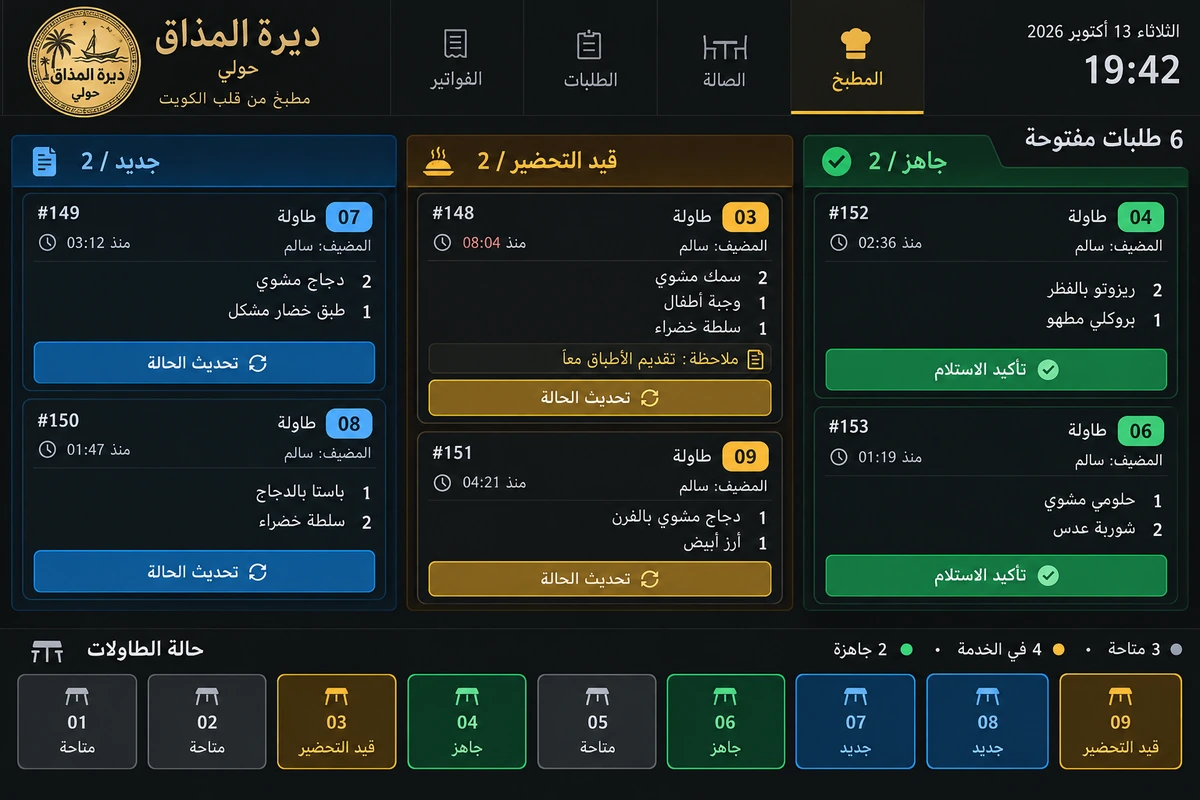
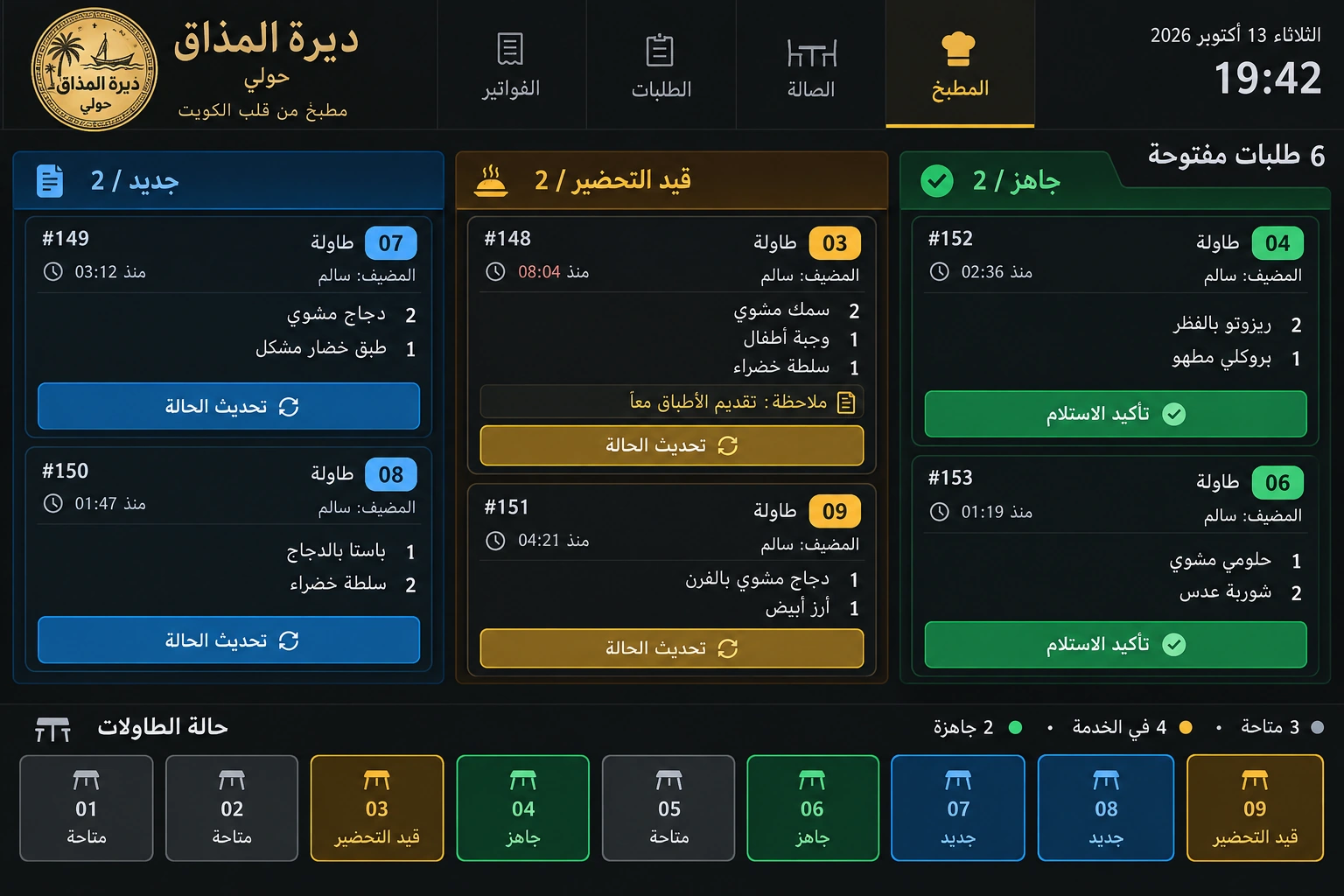
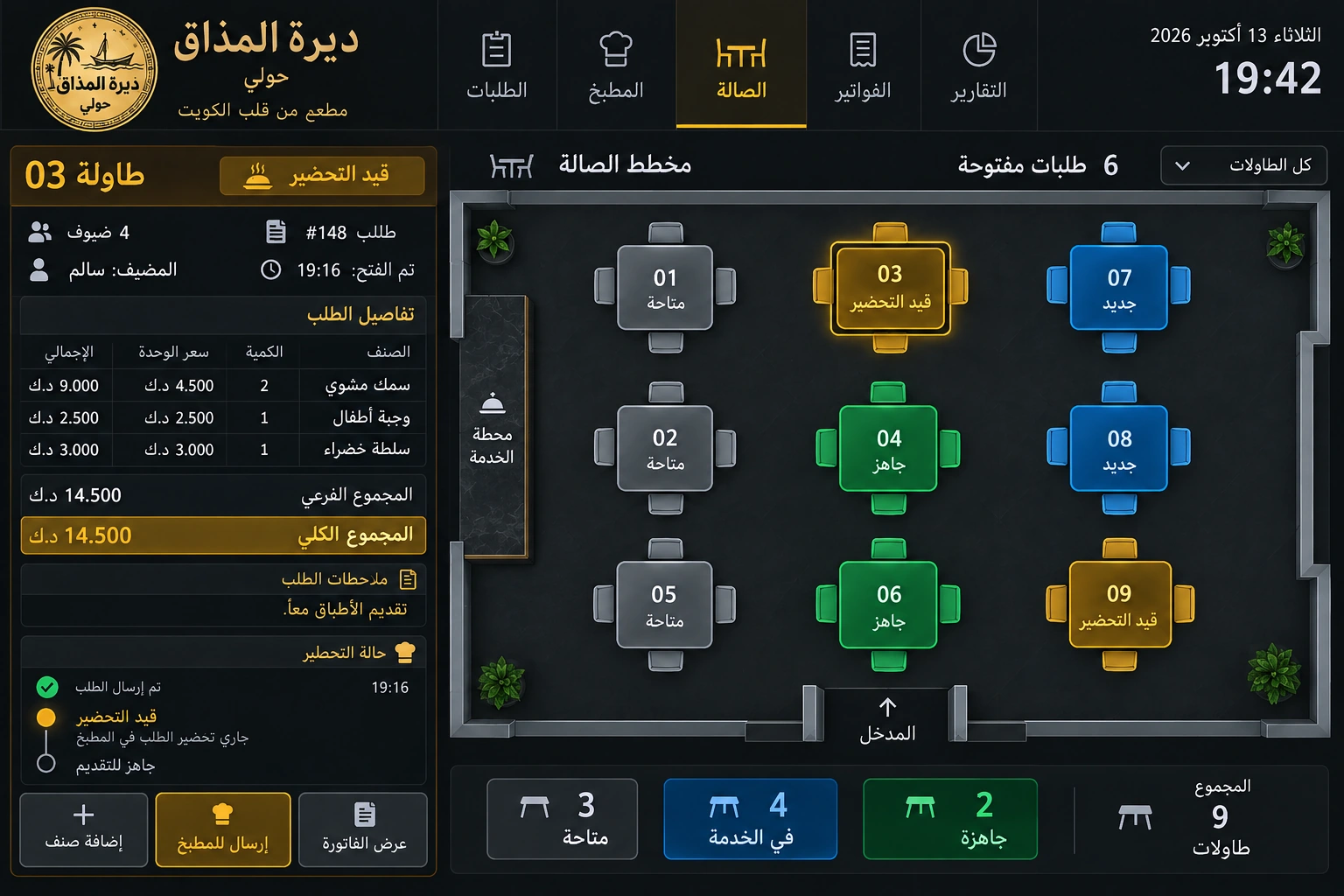
The kitchen shows six tickets: two new, two preparing and two ready, matching the visible cards. Instructions such as serving dishes together stay with the correct ticket. The floor contains three available, four in service and two ready tables, totaling nine. Table three has two fish portions totaling nine dinars, a children's dish at two and a half, and a salad at three: fourteen and a half dinars overall, with no invented tax or fees.
03 / The experience
The experience
During evening service waiter Salem opens table three for four guests. He checks the order number, opening time, items and serve-together instruction before sending it to the kitchen. The pass shows its preparing ticket and timer alongside two ready orders. When food is ready, the floor reflects that state and Salem can collect it without another call. Billing remains in the table detail, outside the preparation workspace.
04 / What it could do
What it could do
One table reference
Keep floor, ticket and detail numbers consistent and connect guests, opening time and responsible waiter.
Clear kitchen passing
Use stable states and colours for new, preparing and ready tickets, with the right serving notes.
Reviewable totals
Show dish quantity, line total and order total in Kuwaiti dinars before bill review.
Role-specific actions
Give kitchen staff update and collection actions while retaining items, guests and billing for the floor.
05 / A typical journey
A typical journey
Open the table
Salem selects table three and verifies its four guests and order number.
Review the order
He checks quantities, notes and the 14.500-dinar total before sending it.
Follow preparation
The chef sees the correct ticket state and updates it when the dishes are ready.
Serve the meal
The waiter collects ready food and follows the table state through the final bill review.
06 / Inside the interface
Inside the interface
Arabic interfaces with right-to-left reading and sample workflows set in Kuwait. Open the images to explore the details.
Explore the screens.
Open any screen to explore the complete project gallery.
07 / Design direction
Design direction
An Arabic plate-inspired mark, deep charcoal, amber and large legible type give the restaurant a practical identity. The kitchen's large tickets differ from the floor plan and billing detail, but colours retain their meaning. Both images show one 19:42 service moment with consistent tables, ticket counts and amounts, making the UI read as a working system.
Discuss a similar idea